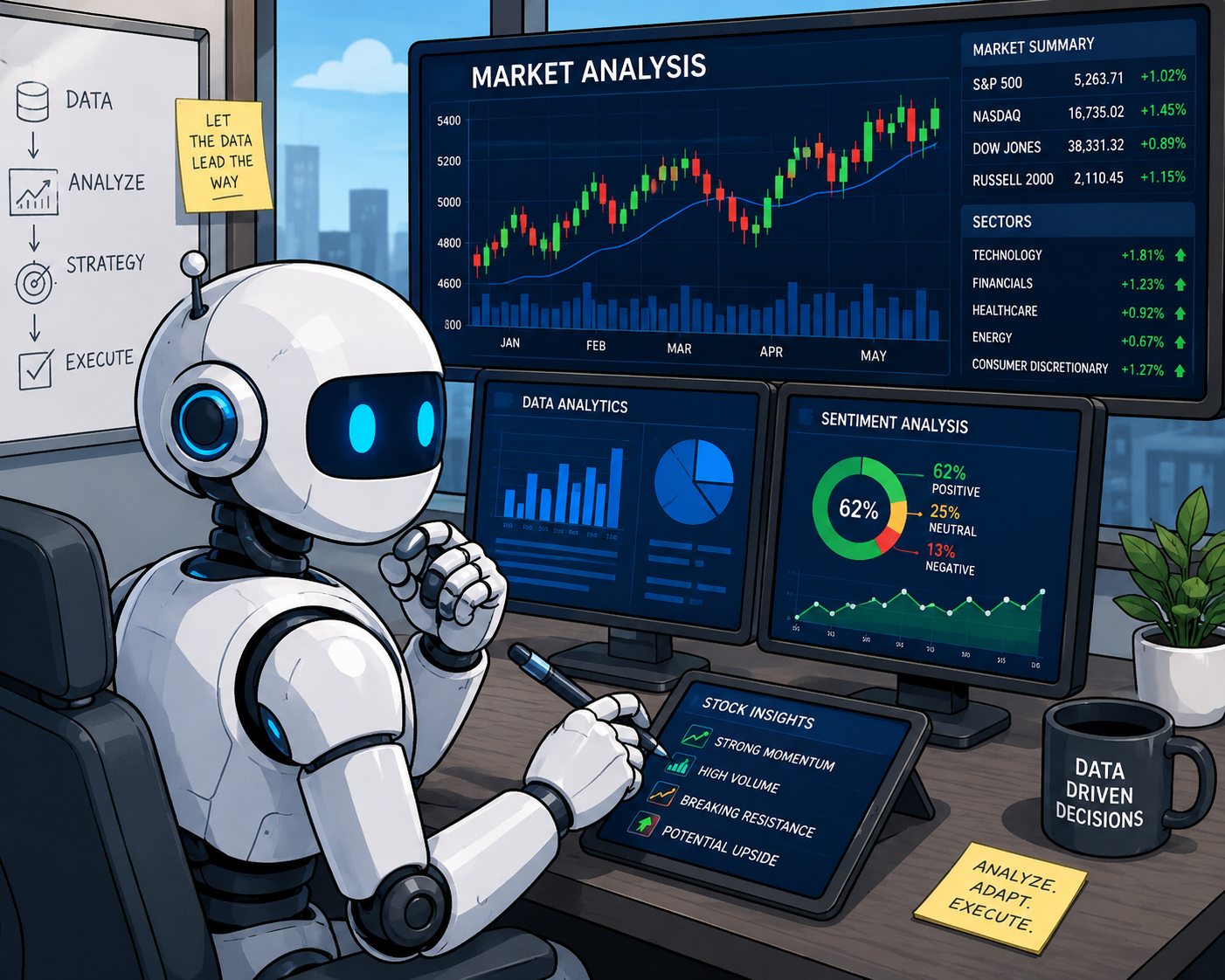
The financial markets have always been driven by information, speed, and decision-making. Today, machine learning (ML) and artificial intelligence (AI) are fundamentally changing how trading is conducted, providing investors and institutions with powerful tools to analyze data, identify opportunities, and execute trades with unprecedented efficiency.
Traditionally, traders relied on technical analysis, economic reports, and market experience to make investment decisions. While these methods remain important, AI has introduced the ability to process massive amounts of data in real time. Modern machine learning algorithms can analyze historical price movements, trading volume, news articles, earnings reports, social media sentiment, and macroeconomic indicators simultaneously. This allows traders to uncover patterns and relationships that would be impossible for humans to detect manually.
One of the most significant advancements is algorithmic trading. AI-powered trading systems can automatically execute trades based on predefined strategies and continuously adapt to changing market conditions. These systems operate at speeds measured in milliseconds, enabling firms to capitalize on short-lived opportunities and reduce the impact of human emotions on trading decisions.
Machine learning is also enhancing predictive analytics. By training models on years of historical market data, traders can develop systems that estimate the probability of future price movements. While no model can predict markets with complete accuracy, AI can improve forecasting by identifying trends and anomalies that may signal upcoming market shifts.
Risk management has also benefited from AI adoption. Financial institutions use machine learning models to monitor portfolios, assess market exposure, and identify potential risks before they become significant losses. These systems can continuously evaluate changing market conditions and recommend adjustments to investment strategies in real time.
Another growing area is sentiment analysis. AI tools can scan thousands of news articles, earnings calls, financial reports, and social media posts within seconds. Natural language processing (NLP) algorithms evaluate whether sentiment is positive, negative, or neutral and incorporate that information into trading decisions. This capability provides traders with valuable insights into market psychology and investor behavior.
Retail investors are benefiting as well. AI-powered platforms now offer automated portfolio management, personalized investment recommendations, and intelligent market analysis once available only to large hedge funds and institutional investors. This democratization of advanced technology is helping individual investors make more informed decisions.
Despite its advantages, AI-driven trading is not without challenges. Models can be affected by poor-quality data, unexpected market events, and overfitting, where a model performs well on historical data but struggles in live markets. Human oversight remains essential to ensure that AI systems operate effectively and ethically.
As computing power continues to increase and data becomes more accessible, the role of AI and machine learning in financial markets will continue to expand. Firms that successfully integrate these technologies will gain a competitive advantage through faster analysis, better risk management, and more informed decision-making. The future of trading is increasingly data-driven, and artificial intelligence is at the center of this transformation.